Wolfe Street Educators Attend National NWEA Conference
July 21, 2026
Professional development is a cornerstone of Baltimore Curriculum Project’s (BCP) approach to supporting educators. Each year, BCP educators attend the national conference for the Northwest Evaluation Association (NWEA), the educational assessments and professional development best known for creating the MAP Growth test (Measures of Academic Progress), used by BCP.
The NWEA Fusion 2026, held June 23–25, 2026, in Orlando, Florida, offered BCP educators in-depth workshops on classroom-tested strategies to maximize student growth and leverage NWEA data and networking opportunities.
Wolfe Street Academy sent two teachers, both first-time NWEA conference attendees:
- Ashley Green, BCP Academic Coach/ New Teacher Mentor
- Katrina Kickbush, Special Educator
We talked to them about their experiences and the impact the NWEA conference will have on their teaching and coaching this fall:
What was your favorite session? What did you learn from it?
 Ms. Kickbush: The “MAP Data in Action: Data Tools to Translate NWEA Data into Effective Classroom Practices” session. It was all about how to review student quintiles and then identify areas of focus and relative strength after each NWEA administration, to laser-focus on one instructional area in reading and math to guide small-group intervention and to see movement.
Ms. Green: Same. This session provided practical strategies for transforming assessment data into meaningful instructional actions. I especially appreciated the innovative data sheet templates designed to support conversations with students, families, teachers, and school leaders. These tools help make data more accessible and actionable, fostering stronger collaboration around student achievement.
 What are your two biggest takeaways/insights from the conference?
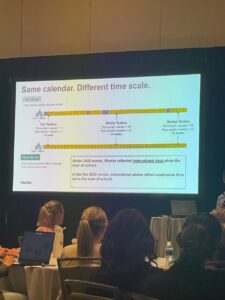
Ms. Green: My two biggest takeaways centered on targeted intervention systems and purposeful data-driven planning. One presentation highlighted a school that achieved significant student growth by implementing a highly structured intervention model. Their Instructional Leadership Team (ILT) met regularly to analyze MAP data and identify students needing additional literacy or mathematics support. The school built intervention blocks directly into the master schedule before the school year began, ensuring the work remained protected from interruptions. Students receiving Tier 2 support participated in interventions three days per week, while students requiring Tier 3 support received daily interventions.
During intervention blocks, the entire grade level paused instruction for 30 minutes, allowing staff members across the building to provide targeted support in small groups. This systematic approach resulted in impressive student outcomes and reinforced the importance of intentional planning and collaboration.
Another key takeaway was the wealth of resources available through NWEA. Schools can partner with their NWEA account manager to access grade-level reports and instructional resources aligned to state standards. I was also introduced to responsive instructional planning tools and family-friendly resources that can help educators and families better understand assessment results. One particularly inspiring idea was hosting a “Data and Donuts” event after testing windows, where families could review student reports, ask questions, and gain a deeper understanding of their child’s progress.
Perhaps the most powerful message shared during the conference was: “If we didn’t discuss data or examine student work, we didn’t have a Professional Learning Community (PLC).” This statement reinforced the importance of keeping student learning and evidence of growth at the center of collaborative planning conversations.
Ms. Kickbush: First, average growth is not enough growth for our students in red and orange NWEA levels because with average growth they will continue to be behind. We need to focus on targeted interventions for those students to drive further growth and close the achievement gap. Secondly, this is a team effort. We need to support each other through targeted conversations focused on actionable data for individual, classroom, and school-wide growth.
What was your favorite aspect of the conference?
 Ms. Kickbush: It was all digital from creating my schedule to materials to a game through a self-contained app, which I can now go back and access all the materials. I worked with actual data from my school, giving me a head start next year on digging into it. Everything was actionable. If the presenters didn’t give me the exact materials I need for next year, I walked away with ideas on how to make the materials I need.
The conference was so good, and I learned so much that I am hoping to attend again next year.
Ms. Green: My favorite aspect was the energy and inspiration that filled each morning’s general session. The keynote presentations featured motivational messages, stories of perseverance, and examples of school districts achieving remarkable results through intentional use of NWEA MAP data. These sessions were both uplifting and empowering, reminding educators of the impact we can have when we remain focused on student growth and continuous improvement. The conference left me feeling energized, motivated, and excited to apply new ideas in support of our students and teachers.
I am grateful for the opportunity to learn from educational leaders, collaborate with colleagues, and connect with NWEA partners from across the country. The experience provided valuable insights that I am excited to bring back to support teaching and learning at Wolfe Street Academy.