
City Springs Selected as Maryland Green School
September 23, 2026
One of Maryland’s newest Green Schools is City Springs Elementary/Middle School, chosen after a two-year grant application and announced last Earth Day on April 22, 2026. Part of a statewide network of PreK-12 schools, Maryland Green Schools, sponsored by the Maryland Association for Environmental and Outdoor Education, recognizes sustainability programs that are helping to empower youth to make changes to reduce environmental impact, encourage sustainability, and foster environmental literacy.
The efforts of the 702 Maryland Green Schools (about 40% of all Maryland schools) are significantly improving the environment at schools and in the community by reducing and managing waste, energy and water.
 The Evolution of CIty Springs’ Selection as a Maryland Green School
Rob Summers, one of two City Spring’ Assistant Principals, has been on the board of Maryland Association for Environmental and Outdoor Education, the organization that promotes, supports, and certifies Green Schools, since 2022. Three years ago, he encouraged his school colleagues to apply for the program, which connects the school with environmental partners, resources, and funds.
Throughout his career in education, Mr. Summers believes students understand the importance and joy of caring for nature intuitively in a way that some grown-up people have forgotten. “Students’ passion, ideas, and commitment to environmental stewardship is critical to ensuring a healthy and happy natural world around us going forward,” he adds. “It actually inspires a lot of adults to get involved as well.”
Elizabeth Bartholme, a 15-year City Springs’ veteran who teaches 6th Grade Science, oversaw the grant application and leads a schoolwide Green Action Committee. Her lifelong passion for the environment and experience teaching science for various grade levels made her a natural and enthusiastic choice.
“I’ve always just been interested in all things green,” she says. “I was a girl scout for my entire elementary years and joke that my mom was doing green stuff before it was cool and popular. I wanted to do this because I wanted the students and teachers at City Springs to have a basic understanding of being more environmentally friendly.”
The school’s green efforts are particularly important for a community of kids growing up in an urban landscape. “We don’t have any trees [the school grounds],” she adds. “It’s important that our students experience environmental ideas and concepts because it’s not part of their everyday life. Our science curriculum does a great job with this.”
What she and her committee discovered while creating the Green Schools application was a depth and breadth of efforts despite not having green space at school or an environmentally friendly building.”The fact that we still managed to become a green school is something that I’m very, very proud of because the kids really worked really hard here. We’re moving in the right direction!”
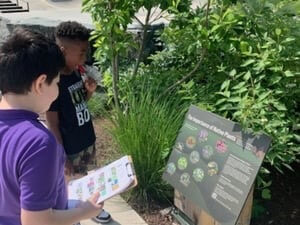
A benefit to City Springs as an urban school is actually very green, Ms. Bartholme notes: “We have a privilege over most schools because we are in downtown Baltimore and can walk everywhere. Our kids can go on field trips and can walk to the National Aquarium, Patterson Park, Camden Yards, and other places.” This expands into classroom lessons on carbon monoxide and air quality.
City Springs’ Sustainability Lessons in and out of the Classroom
In compiling the grant, City Springs showcased the breadth of lessons occurring in and beyond the classrooms, which embrace various local resources and regional partners to expand the students’ environmental awareness.
- Pre-K language and science: Students learn the parts of trees in their language time and in science class, learn how plants help people breathe and clean the air.
- Kindergarten science: Students learn about animal habitats through field trips to Patterson Park to see plants and animals at the pond and on the trails .
- 1st grade science: Students learn about keeping trash out of sewers, which lead directly to the Inner Harbor, Chesapeake Bay, and Atlantic Ocean. They pick up trash on school grounds, learn about wider beach clean-up efforts, and sign their own petition to keep our oceans clean.
- 2nd grade science: Students focus on Earth Day and recycling efforts in City Springs. They spend April learning about recycling via read-alouds, videos, art projects, and in class practice.
- 3rd grade science: Students go on a field trip to Masonville Cove to learn about water quality and solve the mystery of who or what killed the rockfish. Students went through stations and learned about how people can have a negative impact on water quality, especially in the Inner Harbor and Chesapeake Bay.
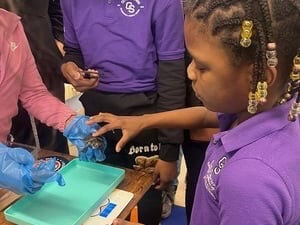
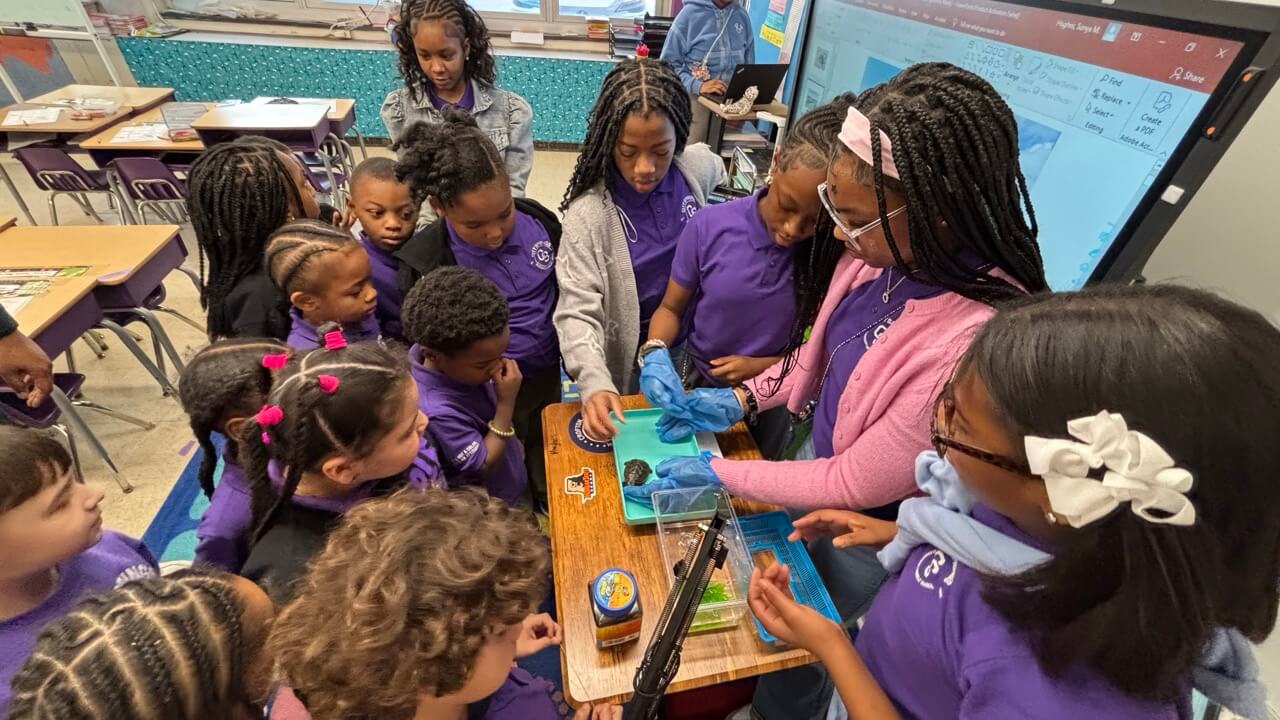
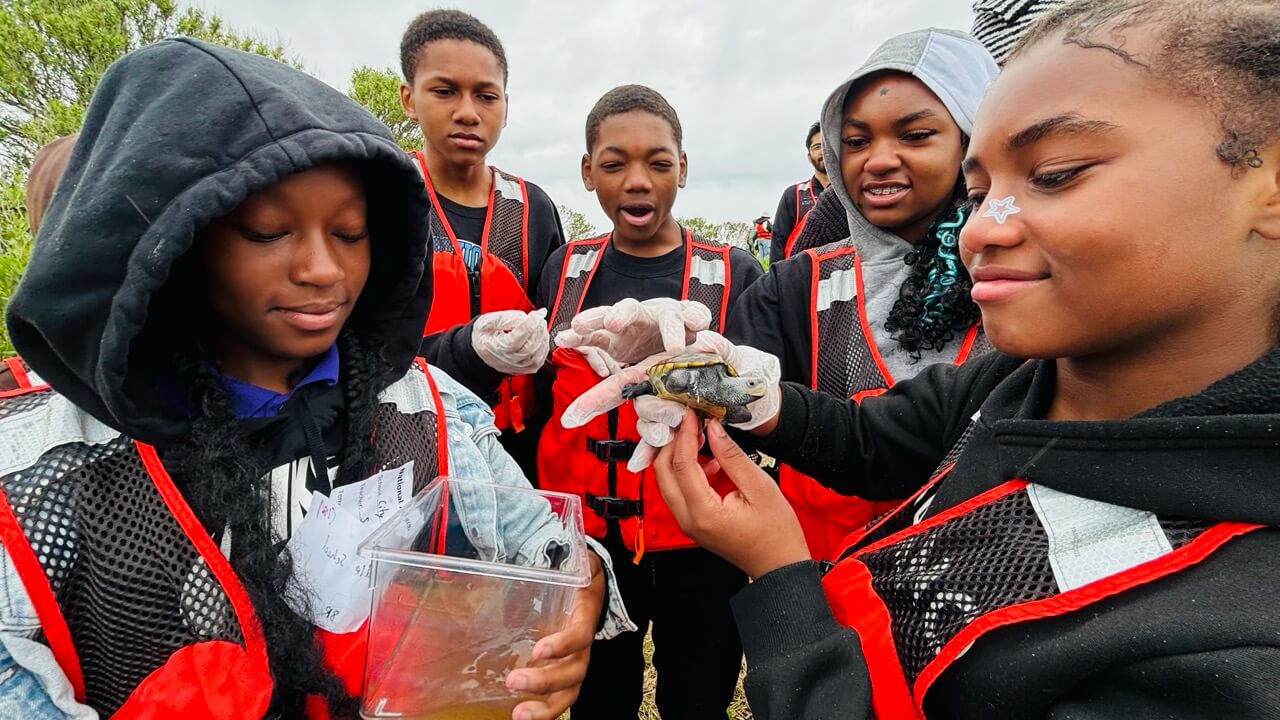
- 4th grade science: Middle School students working in partnership with the state’s Terrapins in the Classroom program visit the 4th grade classroom to teach about turtles and their habitat through the Diamondback turtle that the Middle School cares for. Students learn about the importance of good water quality and keeping habitats and ecosystems clean so plants and animals can thrive in them. Read more about the City Springs’ 2026-26 Terrapin experience.
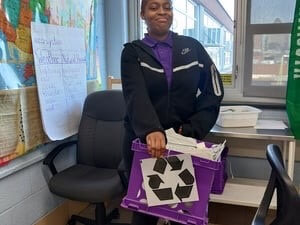
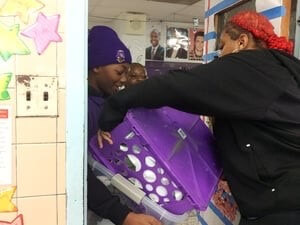 In addition to classroom lessons, students lead a revamped schoolwide recycling program. The Green Student Team, part of the school’s Leadership Academy Middle School leadership development program, through a grant from Green, Healthy, Smart Challenge Award, gave a purple crate to every classroom and office for old and unused paper. Each Friday the Green Student Team collects the crates from classrooms and offices.
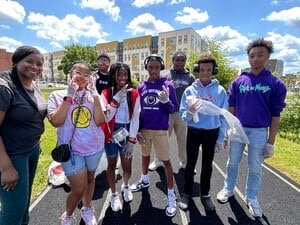
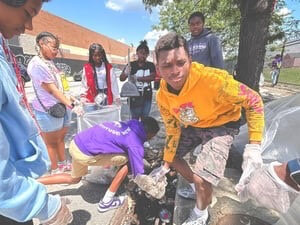
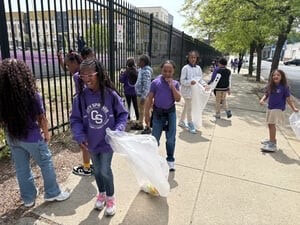
All grades participate in Earth Day or other environment-themed holidays such as Earth Hour, America Recycles Day, World Water Day, Arbor Day, etc. This included a community cleanup event on Earth Day 2025 where students filled several bags with trash they picked up from around the outside and inside the school perimeter.
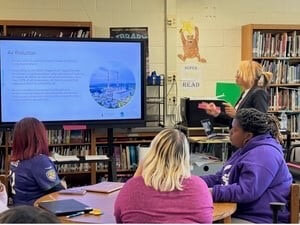
Sustainability professional development included a 2025 session on air quality and the air quality monitoring station placed at City Springs by Dr. Terri Adams-Fuller, professor in Howard University’s department of sociology and criminology and deputy director of the NOAA Cooperative Science Center in Atmospheric Sciences and Meteorology (NCAS-M) to track the impacts of air quality on communities in urban and other areas.
Monthly staff meetings include discussion of each month’s Green Habits and how to incorporate them into lessons and class discussions. These habits, inspired by City Springs’ monthly Habits and Attributes that address behavior and positive community aspects, are shared during daily broadcasts by the 8th grade Eagles Soar broadcasting team.
The Green School Habits:
- September: Use Public Transportation
- October: Recycle
- November: Reduce Electricity Use
- December: Clean Up Your Neighborhood
- January: Turn Off the Tap
- February: Reuse
- March: Buy Used Goods
- April: Go Meatless Once a Week
- May: Eat Seasonal Foods
- June: Celebrate Your Green Year and choose a habit to continue throughout the summer
Read the Monthly Green School Habit PDF.
What’s Next for City Springs as a Green School?
The Green Action Committee will roll out new initiatives this year and is working with the school administration to consider green aspects of the new City Springs building, such as solar panels and an outdoor garden, which will be managed by a student gardening club. The new building will be Net-Zero and have outdoor learning spaces students advocated for, notes Mr. Summers.
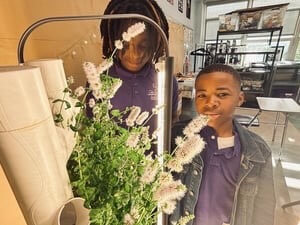
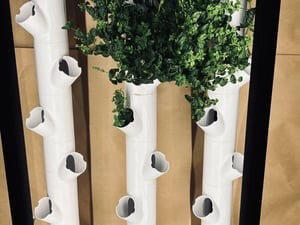
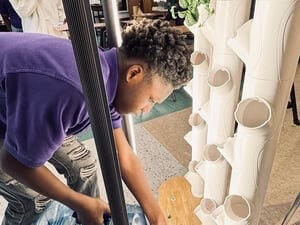
There are plans to have students use the food they are growing in the hydroponic garden, which has inspired a larger discussion about food waste. The Green Schools application uncovered a sustainability effort that was student inspired. When students don’t want fruits and vegetables at lunch, they place them in a box. Instead of being completely re-used by the cafeteria, students were taking extra fruit and vegetables and putting them in classrooms for students to have as snacks for students who come in late in the morning.
“My dream is for City Springs to be known as a green school for everyday things like recycling, eating fruits and vegetables, and not wasting food because that’s who we are as City Springs students and as a City Springs community,” Ms. Bartholme says. “I want sustainability to be organic and just normal for our students. Even though we are in downtown Baltimore, we are very creative and resourceful when it comes to becoming a green school.”
Adds Mr. Summers: “It has been incredible to see how the teachers and scholars have taken this effort and gone further than I ever imagined with it. City Springs is about as urban a school as there is, but the opportunities to learn and care for the natural world abound and our students have made the most of these opportunities, whether making the building greener, taking advantage of learning opportunities at the National Aquarium and the Inner Harbor, or releasing terrapins we raised at Poplar Island. And when our new building is completed, you are going to see City Springs take green to the next level.”
Thanks, City Springs and the Green Action Committee, for your incredible efforts!
City Springs’ Green Action Committee:
- Elizabeth Bartholme, Committee lead and teacher
- Lashawna Bracey, teacher
- Courtney Davis, teacher
- Mo DiFranco, school social worker
- Mary Beth Francisco, teacher
- Susan Finkel, teacher
- Sonya Hughes, teacher
- Carson Korman, teacher
- Allyson Lakey, teacher
- Ashley Lefever, teacher
- Elizabeth Sturgeon, teacher
- Robert Summers, assistant principal
- Jennifer Uhl, school speech pathologist
- Tracie Veney, teacher