
How BCP’s Academic Coaches Strengthen Teaching and Learning
September 23, 2026
A hallmark of the Baltimore Curriculum Project (BCP) educational model is the use of academic coaches in each BCP school. These full-time former classroom teachers serve as peer leaders and mentors to veteran and newer teachers. Highly trained, BCP academic coaches work individually with teachers and departments to provide training on Direct Instruction and other subjects.
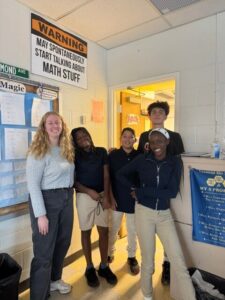 The result? A robust, ongoing culture of teacher support and community that creates real-time feedback and translates into instructional differentiation to help every learner thrive in the BCP classroom.
This school year, Nora Hogan, former BCP Academic Coach and assistant principal in the Anne Arundel Public School System, joined BCP as Director of Academic Coaching and Development. She is leading BCP’s network’s instructional coaching efforts, supporting professional learning for educators, and helping to strengthen teaching and learning across all six BCP schools.
We asked Nora and Kat Locke-Jones, Middle School Academic Coach at Hampstead Hill Academy, who recently pivoted from the classroom teacher role to Academic Coach, to reflect on their roles and the impact of BCP’s coaching model.
Nora Hogan
Director of Academic Coaching and Development
 How is BCP’s academic coaching model unique? And why is it so effective?
BCP’s academic coaching model is unique because in most schools, teachers are left to figure things out mostly by themselves. At best, they may have a reading specialist that checks in with them on identified struggling readers or provides a one- time training for their program. They might also have monthly classroom observations from instructional leadership but they might not receive meaningful feedback and follow up support to ensure teachers can put critical needs into action effectively.
At BCP, an instructional coach works alongside their teachers to give embedded training and support whenever they or their students indicate they need it. BCP coaches ensure all staff members have the training they need to start the programs effectively. Then, a coach is there to support them in whatever way is most helpful throughout the school year: in modeling lessons, coaching side-by-side or providing regular weekly observational feedback. The coach is also analyzing classroom data weekly so when teachers or their students experience struggles, a coach is able to give meaningful suggestions for support. And the best part is that it’s not just new or struggling teachers that receive this support. All our teachers, regardless of their experience levels, receive support and guidance because we at BCP truly believe learning never stops.
BCP is so effective because it decreases teacher isolation, increases teacher development opportunities and thereby, increases student outcomes. Our teachers love our instructional coaches because they recognize how much these individuals are willing to do to help them be as successful at their jobs as they could possibly be.
What are your goals for BCP’s Academic Coaching program?
First, I issued a survey to our coaches about their own professional development. I wanted to know what they felt was impactful to them in the past and what suggestions they had for making their own learning meaningful moving forward. I then paired that information with individual conversations with principals about their schools’ instructional priorities this year.
The feedback was that coaches at the six schools wanted to feel more like a team and have frequent and regular opportunities to collaborate, especially among coaches that shared similar coaching responsibilities in content or grade level. They want different ideas and opportunities to solve problems together. Coaches also asked for more professional development in using questions to guide conversation with teachers, concrete strategies to produce more teacher efficacy and leadership, and tools to help teachers implement rigorous academic standards across all grade levels and content while still holding fidelity to our scripted Direct Instruction programs.
Using these requests as a foundation, I developed a structure for our monthly, three-hour professional development meetings. Coaches have been asked to identify teachers that they will work with over the course of the year. They will gather baseline data. Then, each month, as a coaching team, we will examine different strategies using Teach like a Champion 3.0 (Lemov, 2017) and the Instructional Coaching Handbook (Young, Julien & Osborne, 2023) as our anchor texts. Our coaches will practice the selected strategies together and then return to their respective schools to share them with their teachers. The goal by the end of the school year is to have data to show that their coaching had a direct impact on teachers. Also built within these sessions as a routine part of the meeting are times for sharing complex issues coaches are facing with opportunities for problem-solving, brainstorming and collaboration.
How will this approach create stronger classroom teachers and coaches?
We have so much talent and experience both in our coaching staff and in our schools. I want to make sure we are sharing that institutional knowledge with each other so that all our schools, our teachers and our students benefit from what we already know in our BCP family. Our coaches, since they work with all our teachers and instructional leadership, are some of the best people to share that information.
I also appreciate how important our instructional coaches are to our schools and our teachers. They put on many hats throughout the day and to ask them to take time away from their schools is difficult. However, just as we say to all our students and our teachers that growth is important and learning should not ever stop, the same is true for coaches. They deserve the time to develop and fine-tune their own practices.
Stronger coaching leads to more effective teaching which we know leads to better student outcomes. The monthly coaching professional developments are designed to make that coaching impact concrete which can provide coaches enormous satisfaction and can serve as positive reinforcement for continuous improvement.
What did you learn from your time as an assistant principal in an Anne Arundel County Public School that inspires your new role at BCP?
I experienced tremendous personal and professional growth as an assistant principal in Anne Arundel County. For one thing, up until that point, I had only worked in the Baltimore City Public School System. While teaching and leading have many similarities no matter where you go, the tools that you use to do both can be drastically different in different school systems. I found that I had a lot of learning to do and a lot of growth to make in order to positively impact my school.
To be successful, I had to fully embrace the principles of growth mindset. That was new to me in my career; I was used to talking about growth mindset with students but never needed to rely on it for myself. However, I found that if I reframed my perspective of feeling uncomfortable with all the new tools and programs into a view that was really an indication of a growth opportunity for myself, my motivation to tackle that struggle increased tremendously. I think that has a lot of carry-over to my role now in coaching teachers who are experiencing similar emotions. Helping coaches to guide them in reframing their mindset can help decrease teacher turnover and increase teacher motivation.
Another thing I learned were very effective protocols in leading staff toward examining the effectiveness of their own data and on identifying underlying issues. It utilized reflection and collaboration as a powerful tool for analysis. One of the protocols we used was the Root Cause Analysis, which asked “why” an issue was occurring. You need to continue asking “why” at least five times, sometimes more. The outcome allowed for meaningful discussion on all the factors that are impacting an issue, some of which are in our power to control.
Another protocol we used was taking student work (with names removed) and grading it on our own sheets according to a rubric posted on MSDE’s website. Then we would pass it to a grade-level partner for them to grade. At the end, we would compare our grades to each other for each student’s work and then defend why we gave that grade. The outcome of that protocol was that everyone on the team walked away understanding the level of rigor the rubric required students to reach. It was a highly effective tool for teachers and coaches. I plan to show and encourage coaches to use that strategy this year at some of our schools.
Read more about Nora’s experience, which includes working as a BCP Academic Coach at Hampstead Hill Academy from 2010 to 2017, then parttime as a coach until 2020.
Kat Locke Jones, NBCT
Middle School Academic Coach, Hampstead Hill Academy
Director, Hampstead Hill’s Leaders Go Places
 Kat Locke-Jones, 2024-2025 Baltimore City Public Schools and Maryland Teacher of the Year, most recently taught 7th grade English language arts teacher at Hampstead Hill Academy. For 2026-2027, she has moved into a new role as an Academic Coach. She also is co-founder of SL24, a mental health advocacy initiative and Sean’s House, a free resource for young adults ages 14–24 that provides a space to find support, make friends, practice self-care, learn new coping skills, and lead an empowered life.
Tell us about your pivot from the classroom to becoming an Academic Coach.
I loved being a classroom teacher, so the decision was never about wanting to leave the classroom behind but going into more classrooms! In a role as interventionist, I found myself increasingly drawn to the moments when I could collaborate with other teachers, whether it meant looking at student data, planning instruction, problem-solving, or helping someone recognize a strength they might not yet see in themselves.
How are you finding your new role, and what is most exciting to you?
I truly love it! Every day is different, and I get to see our school from a much broader perspective. What excites me most is helping teachers turn an idea or challenge into something actionable. I love being able to say, “Let’s look at this together,” and then work alongside someone to find a solution. It is also incredibly rewarding to see how a small shift in instruction or classroom culture can have an impact on an entire group of students.
Why is peer mentoring so critical for teachers, whether they are new to the classroom or veterans, like you were at Hampstead Hill?
Even after years in the classroom, I benefited tremendously from trusted colleagues who could observe something I could not see from inside the lesson. The best peer mentoring is not about one person having all the answers. It is about creating a relationship where teachers feel safe enough to be honest, reflect, take risks, and keep improving.
What has been your biggest surprise in moving into this role?
My biggest surprise was how much of coaching is about listening. I think sometimes we expect coaches to spend a lot of time-sharing strategies and resources, but I have learned that the most important first step is understanding what a teacher is experiencing, what they have already tried, and what support would actually be useful.