The Future and Impact of Baltimore Curriculum Project: A Conversation with President and CEO Laura Doherty
June 18, 2026

June 18, 2026
The Baltimore Curriculum Project (BCP), Maryland’s oldest and largest operator of neighborhood conversion charter schools, wraps up its year-long 30th anniversary celebration. In 1996, BCP was founded by Dr. Muriel Berekely, with support from the Abell Foundation, to bring research-based, effective reading programs to Baltimore City Public Schools.
The result is nothing short of phenomenal. BCP is a nationally recognized leader in Direct Instruction (DI), the program Dr. Berkeley introduced to City Schools. BCP pioneered Restorative Practices in Maryland schools, and BCP is renowned as an exemplary Community Schools model.
As the 30th anniversary year comes to a close, we asked Laura Doherty, BCP President and CEO, to reflect on the celebration, BCP’s impact, and what’s next for BCP.
As BCP celebrated its 30th anniversary, what reflections or realizations stood out to you most?
Education can be a very transient field. Programs change, leadership changes, and organizations come and go. But BCP has endured. One thing that really struck me was the number of people who have dedicated decades of their careers to BCP.
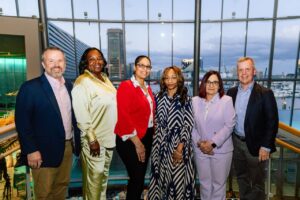 As I prepared for our “Are You Smarter Than a BCP Student?” Gala, we planned to recognize longtime board members. Then I thought, we should also recognize our longtime teachers and staff. When we started looking at the list, there were so many people who had been with BCP for 20 years or more, and even more who were just shy of that milestone.
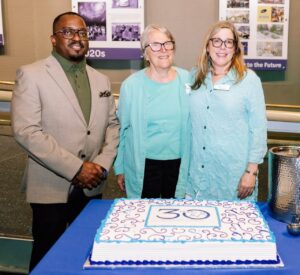 It really hit me how fortunate we are to have such talented administrators, teachers, paraeducators, and support staff who have chosen to stay and grow with us. I think part of our longevity comes from supporting people in ways that help them be successful, happy, and continually improve at what they do. When that happens, people stay.
Looking at BCP through a 30-year lens made me realize just how important that consistency has been to our success.
Other highlights from the past year?
We’ve been implementing Direct Instruction for 30 years, and honestly, we’re better at it today than we’ve ever been. We’ve also built a strong, long-standing partnership with Baltimore City Public Schools, which is something I’m incredibly proud of.
One particularly meaningful moment came at outgoing CEO Dr. Sonja Santelises’ final school board meeting in June. She recognized many people who often work behind the scenes, and BCP was the only organization outside of City Schools that she specifically mentioned. Hearing her acknowledge our partnership was incredibly gratifying.
Another highlight was publishing our first-ever Impact Report. Seeing three decades of accomplishments and student success stories brought together in one place was powerful. And, of course, premiering two documentaries this year gave us a chance to tell BCP’s story in a way we never had before.
What excites you about the next 30 years for BCP?
I’m excited about the possibility of expanding our impact. Whether that’s through additional neighborhood conversion charter schools, helping more schools implement Direct Instruction or Restorative Practices, or finding new ways to share what we’ve learned over three decades, I think there’s tremendous opportunity ahead. We know certain approaches work. The question now is how we can help more schools and students benefit from them.
What evidence have you seen over the years that reinforces the effectiveness of Direct Instruction in BCP schools?
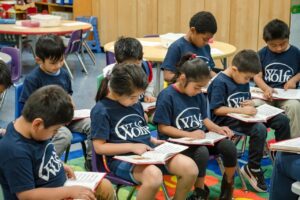 We probably have one of the longest-running Direct Instruction implementations in the country. Over and over again, we see that our students outperform similar student populations in reading achievement. Not every BCP school has the highest reading scores in Baltimore or Maryland, but when you compare our schools to others serving similar student populations, our results are consistently stronger. That’s especially significant given the high student mobility that many of our schools experience. The consistency of those results, year after year, tells us that the approach works. Additionally, our experience is not the only evidence that DI works. There are more than 500 individual reports spanning several decades showing the effectiveness of DI with all types of learners.
How has BCP addressed the post-COVID issue of chronic absenteeism?
For all public schools across the country, attendance has been one of the biggest challenges facing public education since COVID. We know how to help students make academic gains when they’re in school. The challenge is that we can’t teach students who aren’t there.
Last year, with support from the Abell and Richman Foundations, we launched a new attendance initiative and hired Jayla Pope as BCP’s Lead Attendance Monitor. She works directly with attendance teams across our schools, helping each team develop strategies that fit their specific communities.
The results have been encouraging. Five of our schools improved average daily attendance. The sixth school maintained a high daily average, but was slightly impacted, we believe, by the political pressure with immigration swirling around.
Frederick Elementary saw particularly strong gains. Their team worked tirelessly to connect with families and remove barriers to attendance. As a result, chronic absenteeism dropped by nearly 10 percentage points, and daily attendance climbed to 87 percent. This is a major improvement from pre-pandemic levels of the low 80s.
Those kinds of gains are exciting because we know attendance and achievement are directly connected.
What is next with BCP’s Attendance Initiative?
One of our goals is to share what we’ve learned with educators across Baltimore and beyond. What’s interesting is that there wasn’t one universal solution. Each school approached attendance differently based on its students and families. However, there were common themes.
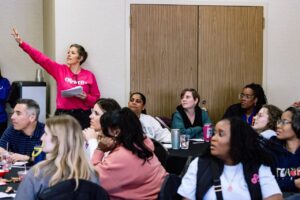 The biggest was intentional outreach. Attendance teams worked hard to identify students who were beginning to miss school regularly, connect with families, understand barriers, and provide support before attendance problems became chronic.
Another important piece was ensuring students actually wanted to come to school. When students are excited to learn and feel welcomed, supported, and connected, attendance improves. Every school can build that kind of culture, even if the specific strategies look different.
As you’ve worked to improve attendance, what longstanding challenges remain, and what new issues have schools had to address?
One challenge this year has been the uncertainty surrounding immigration enforcement in Baltimore. For some families, that’s created understandable anxiety about sending children to school.
Student mobility continues to be another significant challenge. Many Baltimore families move frequently, and each move can disrupt a student’s education. Students often miss days or even weeks during transitions between schools. Those absences add up quickly and contribute to chronic absenteeism.
The challenge is that mobility issues require a different solution than motivation or engagement. Schools need systems to quickly identify when families have moved and reconnect students with educational services. It’s labor-intensive work, which is why strong attendance teams are so important.
This was also the second year of implementing Reveal Mathematics in most BCP schools. How is that going?
 We’re very encouraged by the results so far. As with any curriculum, success depends on implementation. We’ve invested heavily in coaching and professional development to help teachers become stronger and more effective users of Reveal Mathematics.
We’re already seeing positive trends. At City Springs, math growth on the Measures of Academic Progress (MAP) assessment increased from the 52nd percentile nationally last year to the 58th percentile this year. Govans has posted two consecutive years of strong growth in the 60th percentile range, and student achievement continues to rise.
Pimlico’s MAP growth hit 50 for the first time last year (2024-2025) using Reveal Mathematics, and this year, they hit the 52nd percentile, and their achievement rose four points.
Frederick’s MAP growth was nearly the same as last year (50 last year and 49 this year), but their achievement went up by four points from the 25th to the 29th percentile.
Hampstead Hill continues to use Singapore Math, while Wolfe Street plans to adopt Reveal in the coming years.
All of our schools use Direct Instruction math in kindergarten and first grade. Research suggests younger students benefit from highly structured foundational instruction, and our own experience supports that approach. In 2024, Johns Hopkins University Center for Research and Reform in Education researched one school district’s use of Reveal Mathematics. Kids in grades 3-5 had stronger growth, while the K-1st students did not do as well.
As BCP begins this next decade, what excites you most?
 I think we’re really hitting our stride. We have outstanding principals, talented teachers, and strong support staff throughout the network. Attendance is improving. Student achievement is moving in the right direction. It feels like we’re finally putting the disruptions of COVID behind us.
All of the achievements we have made are thanks to Dr. Muriel Berkeley’s vision. She built an organization focused on giving schools the tools, support, and practices they need to succeed. She spent 15 years laying that foundation before passing the baton.
When I became President and CEO, BCP was already a strong organization. Over the years, we’ve continued to refine and strengthen it. Because of that foundation, I’m incredibly optimistic about what we can accomplish in the years ahead.
