Why Bullying Doesn’t Happen in a Vacuum
October 15, 2026

October 15, 2026
October is National Bullying Prevention Month, shining a national light on an issue that can be a daily occurrence for many young people. Bullying can take many forms and can emerge from a variety of circumstances, but at its core, it often involves an imbalance of power or a child seeking a sense of control, belonging, or influence in their relationships.
In 2024, the United Nations Educational, Scientific and Cultural Organization offered a new definition of school bullying: unwanted aggressive behaviour that is repeated over time and includes an imbalance of power or strength that causes physical, social, and emotional harm to the targeted individuals or groups, and the wider school community.
To better understand how schools can prevent bullying and respond to it effectively, I spoke with Andria Cole, Baltimore Curriculum Project’s Director of Restorative Practices. Through her work with students, educators, and families, Andria brings an important perspective to this conversation. She reminds us that while we must address harmful behavior, we must also look at the relationships, experiences, and environments that shape it.
Looking Beyond the Behavior
 As educators, we have a responsibility to ensure that every child feels safe, respected, and supported at school. When a child bullies another student, accountability matters. Children need to understand the impact of their actions, take responsibility for the harm they cause, and learn how to treat others with kindness and respect.
Andria explains that, “We cannot look at a child’s behavior as an isolated incident, nor can we abandon the child because bullying is challenging to manage as educators. In my experience, bullying, especially chronic bullying, stems from children being abandoned emotionally by teachers and parents. Adults don’t do it purposely but because they lack models of emotional support.”
She emphasizes the importance of recognizing that children are shaped by the systems and environments in which they live. Their experiences at home, in school, and throughout their communities influence how they understand relationships, respond to conflict, and interact with others.
We need to look beneath the surface and consider what may be happening in a child’s life. What are they experiencing in their relationships? Do they feel connected to the adults around them? Are they struggling to manage difficult emotions or navigate challenging circumstances?
These questions do not excuse harmful behavior. Rather, they help us respond in ways that address both the behavior and the needs that may be contributing to it.
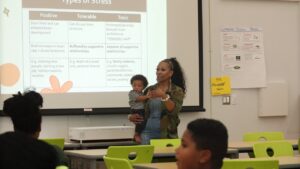
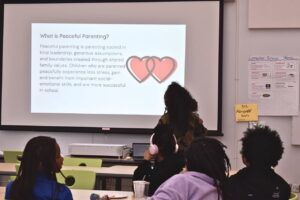
Peaceful Parenting, a relationship-based approach to raising children that prioritizes connection, empathy, and emotional safety over punishment, threats, or coercion, recognizes the powerful influence adults have on children’s behavior. When adults have the support and tools to respond to children with greater calm, connection, and understanding, children have more opportunities to develop those same skills.
Andria has introduced and leads parenting workshops at Govans Elementary School and Pimlico Elementary/Middle School, two of BCP’s six neighborhood conversion charter schools. These monthly workshops and circles give parents opportunities to strengthen their parenting skills, connect with other families, and explore ways to create more peaceful home environments.
Before Children Can Learn, They Need to Feel Safe
 Gun violence and other forms of violence have become an increasingly common part of the world our children are growing up in. Even when children are not directly involved in an incident, the awareness that violence can happen in places where they should feel safe—including schools—can have a lasting impact on how they experience the world around them.
As Andria and I discussed, for children to learn, they need to feel safe and calm in their bodies. “They need to be able to move beyond a state of heightened alert and into what we might call their reflective brain—the part of the brain that allows them to focus, think critically, build relationships, and learn,” she explains.
Bullying is a complex issue that calls for understanding, support and a systems-level response. “Bullying is about children trying to get their needs met and keep their bodies safe,” Andria adds. “If they are in survival mode, then they will do what’s necessary to keep themselves safe.” Children are constantly learning how to navigate relationships, manage big emotions, and respond to challenges. When children feel threatened, disconnected, or overwhelmed, they may respond in ways that are protective rather than productive. Our role as adults is to help them understand what is happening, build the skills they need, and create environments where they feel safe enough to make better choices.
To Prevent Bullying, Schools and Families Need to Be on the Same Team
 One of the most important points Andria shared with me is that bullying prevention cannot rest solely on the shoulders of schools. Families are essential partners in helping children develop the emotional and interpersonal skills they need to thrive.
The relationships children experience at home help shape how they understand trust, boundaries, empathy, and conflict. When parents and caregivers have the support and tools to respond to children with greater calm, connection, and understanding, they can help children develop those same skills.
BCP has invested in Peaceful Parenting Workshops based on Restorative Practices, which are both a set of tools and an approach. But like any tool, it requires training and coaching to understand the tools and wield them effectively. We need to come to the table as educators with our trauma- and stress-informed glasses on.
The Real Work: Building Adult Capacity
As I reflect on my conversation with Andria, I am reminded that creating a safe and supportive school community requires intentional work every day. It is reflected in how we greet students, communicate with families, establish classroom routines, respond to conflict, and help children navigate difficult emotions.
Andria has several strategic, trauma-informed steps schools can take to address bullying behaviors and create more peaceful, positive environments for children, parents, classrooms, and the school community:
At Baltimore Curriculum Project, we believe that educating children means supporting the whole child and recognizing the important role that families and communities play in their development. Preventing bullying is part of that commitment.
The more we can do to strengthen the capacity of the adults around children, the better equipped we all are to help children navigate difficult moments. We can also help families recognize and reduce the impact of toxic stress, both in children’s experiences and in their own lives.
Schools can be an important resource for families, helping parents build confidence and access the tools they need to support their children. Community schools can extend that support even further by connecting families with resources such as food, clothing, and other essential services.
My conversation with Andria reinforced that it is through these everyday moments of connection, support, and guidance that we can help children—and the adults who care for them—build the skills and relationships they need to thrive.
